Sounding Board Perspective: Meet Georgina
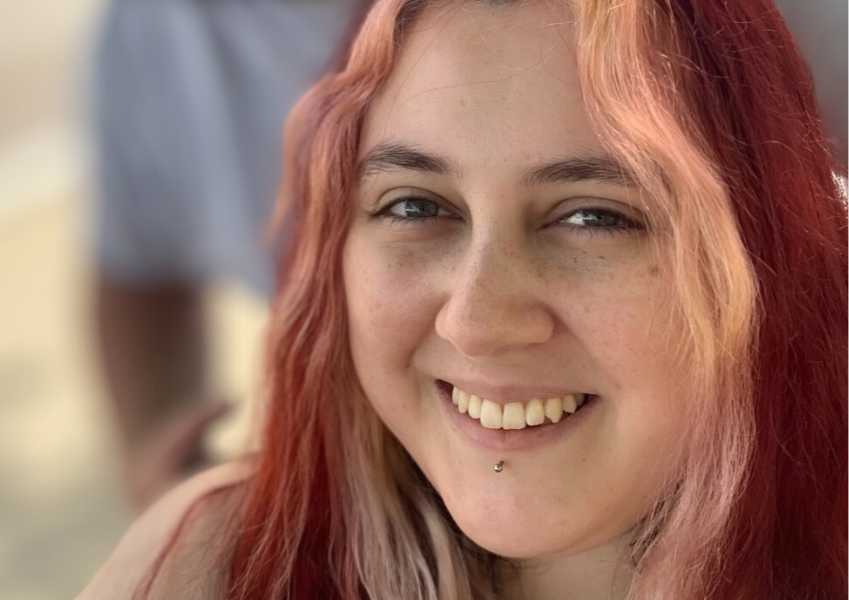
Georgina joined the Genomics Partnership Wales Patient and Public Sounding Board in 2024 and has recently become the newest Public and Patient Representative on our Programme Board, which brings together key stakeholders in genomics to discuss a range of strategic activities.
We spoke to Georgina to learn more about why she joined the Sounding Board and her new role as a Programme Board member.
Can you tell us why you joined the GPW Sounding Board?
I have 26 medical diagnoses, including hypermobile Ehlers Danlos Syndrome (hEDS) and Crohn’s disease, so I’ve had my fair share of experience with healthcare. Both hEDS and Crohn’s are genetic, we managed to trace my hEDS from my granny, down to my mum and then to me and my siblings. So far, they haven’t found the exact gene mutation that causes hEDS, but they have for other types of EDS. Because of that, I’ve always been interested in genetics and how they work.
I started working in patient and public involvement in research six years ago and since then, I’ve offered a patient perspective on over 40 projects and proposals. I’m disabled and very active within the disabled community, so I bring a different perspective to accessibility issues in studies, that able bodied people may not think about. When I heard about the opportunity to influence the world of genomics through the GPW Sounding Board, I jumped at the chance.
Since joining, what would you say your experience has been like?
Since joining, I’ve learnt so much about the world of genomics. We have a six-hour training day, to help cover the basics of what we need to know, and I think I learn more with every Sounding Board meeting about different areas of genomics! My experience has been entirely positive, I genuinely can’t find a single negative about the Sounding Board. I really look forward to each meeting, because I know it will be different from the last and I always come away knowing even more about genetics. We could be asked to look at a genetic testing plan and give our opinions on which results we would value having, or to comment on the Genomics Research Strategy for Wales, for example.
I’ve also really enjoyed the opportunities the Sounding Board has given me to get involved in more genetics-based projects, such as speaking at the Christmas Genomics Cafe for Wales Gene Park and helping them create glossaries of genomics terms for different ability levels.
What’s been your favourite thing about being a member of the Sounding Board?
My favourite thing about the Sounding Board is getting to see how our views and opinions shape genomics. Researchers and partner groups come back to us with feedback of exactly how our views have been integrated and to see our work making a real difference is very rewarding.
What made you want to apply to become part of the GPW Programme board?
Every Sounding Board meeting, we have had feedback from Guy and Sarah as part of their role as Patient Representatives on the Programme Board. Every time they fed back, they always talked positively about the meetings and the work they were doing, they said we were being listened to and were able to give the patient view to the Programme Board well. The ways they fed back were always interesting and engaging too, for example, we wrote down our hopes, fears and motivations for being involved in genomics, then they created a PowerPoint from all the answers to feedback to the Programme Board.
Every Sounding Board meeting, we split into breakout rooms and one person volunteers to feedback to the whole group, most of the time I put myself forward to do it because I really enjoy it. I think being a Programme Board representative is the same thing, just on a larger scale!

What are your hopes for the future of genomics?
One of my hopes for genomics is to reduce the fear and misconceptions that are still very prevalent. I really want to help spread the word about genetics and genomics and put people’s worries at bay. I think the world of genomics needs to prioritise allaying fears people have on things like genetic engineering and “designer babies”, that’s not what we do at all. I think once you know that the fear goes away and people can see the incredible benefits, like in early intervention for genetic conditions. I think being on the Programme Board will enable me to present these fears and hopefully work with the board to find a way to reduce them, this will allow us to show the positive impacts that genomics has and the potential to improve everyone’s lives.
One of the areas I find most exciting in genetics is pharmacogenomics, for example using testing to see if someone is more likely to get side effects from a medication, or which drug will be most effective for them. I’ve spent my life being put on and taken off different medications, while the doctors try to work out what medication is most effective and how to minimise the side effects I get. I’m currently prescribed 26 pills a day, some of them are needed just to counteract the effect of other medications. Pharmacogenomics could have potentially prevented me from having reactions and side effects to certain medications that made me very unwell or put me in hospital. I’m always on the lookout to see what breakthroughs have been made and how they’re going to be used to help people.
What are you looking forward to as a member of the Programme Board?
My first meeting is soon, I’m looking forward to meeting everyone on the Board and hoping that I’ll be able to do the Sounding Board proud and represent everyone well. I met with Sarah, the other Sounding Board representative, and she told me in more detail what sort of things we’ll be doing together. I’m excited to work with her and hopefully feedback to the Sounding Board in the same fun ways her and Guy have become so well known for. I’m hoping that I’ll be able to further influence the world of genetics through the Programme Board by putting forward the patient’s and public’s viewpoints well.